
The Science Behind This Unique Glass Phenomenon
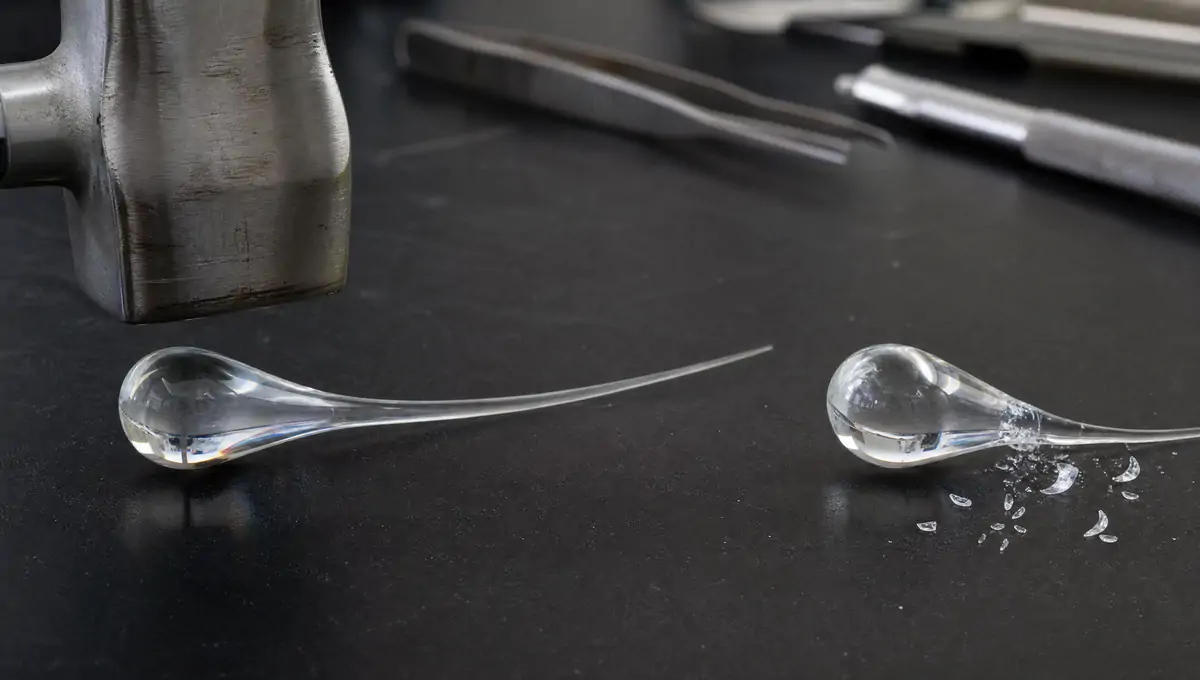
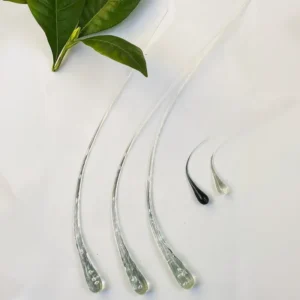
A Prince Rupert’s Drop is one of the most fascinating examples of how a simple piece of glass can behave in an unexpected way. At first glance, it looks like nothing more than a small glass teardrop with a rounded head and a thin tail. However, this unusual glass object can survive powerful impacts on its thick end while instantly exploding into thousands of tiny pieces when its fragile tail is damaged.
For centuries, scientists, collectors, educators, and curious minds have been fascinated by this strange combination of strength and weakness. A Prince Rupert’s Drop is not only a beautiful scientific curiosity but also a perfect demonstration of how internal stress can completely change the properties of a material.
Today, Prince Rupert’s Drops are popular as science demonstrations, educational tools, and unique glass collectibles. Many people display them on their desks or use them to demonstrate the amazing relationship between heat, cooling, and molecular forces inside glass.
The History of the Prince Rupert’s Drop
The story of the Prince Rupert’s Drop dates back to the 17th century. These glass objects became known in England around 1660 and were introduced to King Charles II by Prince Rupert of the Rhine, a German prince and military leader who was also interested in science and experiments.
Because of their unusual behavior, the drops quickly attracted attention among scientists of the Royal Society in London. Early researchers were curious about why the bulb-shaped end could withstand heavy blows while the smallest damage to the tail caused the entire object to shatter.
At the time, scientists did not fully understand the concept of internal stress in glass. The Prince Rupert’s Drop became an important object for studying the mechanical behavior of glass and helped researchers explore how rapid cooling could influence material strength.
Even today, more than 300 years later, the Prince Rupert’s Drop remains a popular demonstration in physics classrooms and science museums around the world.
How Is a Prince Rupert’s Drop Made?
The process of making a Prince Rupert’s Drop is surprisingly simple, but the result is controlled by complex physics.
A glass maker creates a drop by allowing a small amount of molten glass to fall into cold water. The glass is extremely hot, usually around 1,000°C or higher, when it enters the water.
The outside surface of the glass cools and solidifies almost instantly. However, the inside of the drop remains hot for a longer period of time. As the interior slowly cools and contracts, it creates a powerful network of forces trapped inside the glass.
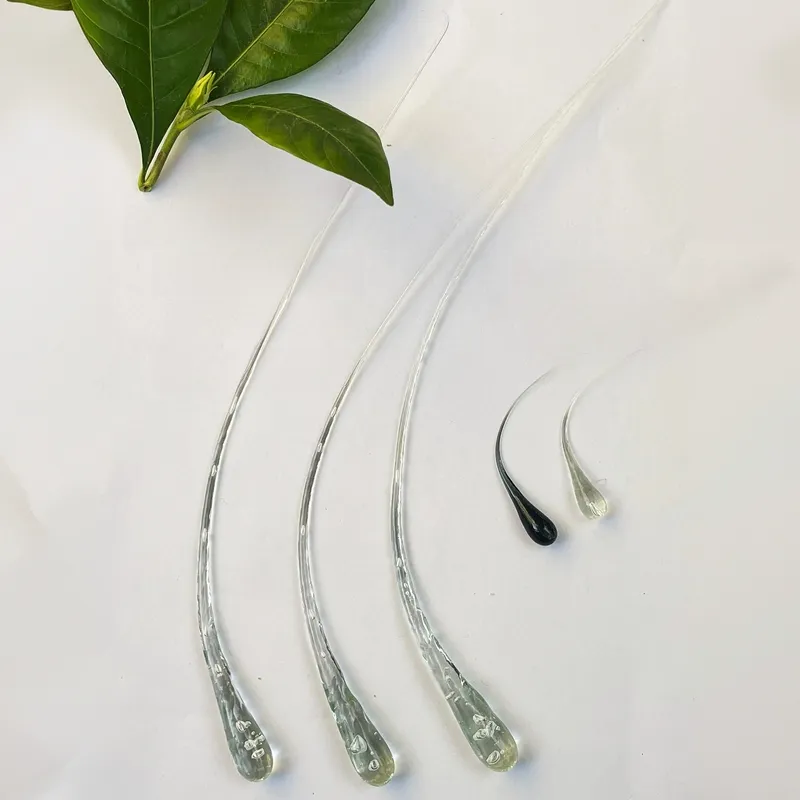
The final shape has two important parts:
- A thick, rounded head
- A long, thin tail
The rounded head becomes extremely strong because the outer layer is placed under compression. The tail, however, contains high internal tension. This difference is what gives the Prince Rupert’s Drop its famous properties.
Why Is a Prince Rupert’s Drop So Strong?
One of the most interesting features of a Prince Rupert’s Drop is the incredible strength of its bulb-shaped head.
When ordinary glass is damaged, small cracks can easily spread through the material. Glass is usually considered fragile because it cannot easily absorb stress. However, the surface compression created during rapid cooling makes the head of a Prince Rupert’s Drop much more resistant to cracks.
The outer layer is constantly pushing inward, which prevents cracks from opening and growing.
Some experiments have shown that the head of a Prince Rupert’s Drop can survive:
- Strong hammer impacts
- High pressure from testing equipment
- Heavy mechanical force applied directly to the bulb
In some laboratory demonstrations, researchers have applied pressures exceeding hundreds of megapascals before the head finally breaks.
A common reaction from people seeing the test for the first time is disbelief. A small glass object that looks delicate can withstand impacts that would normally destroy regular glass.

Why Does a Prince Rupert’s Drop Explode?
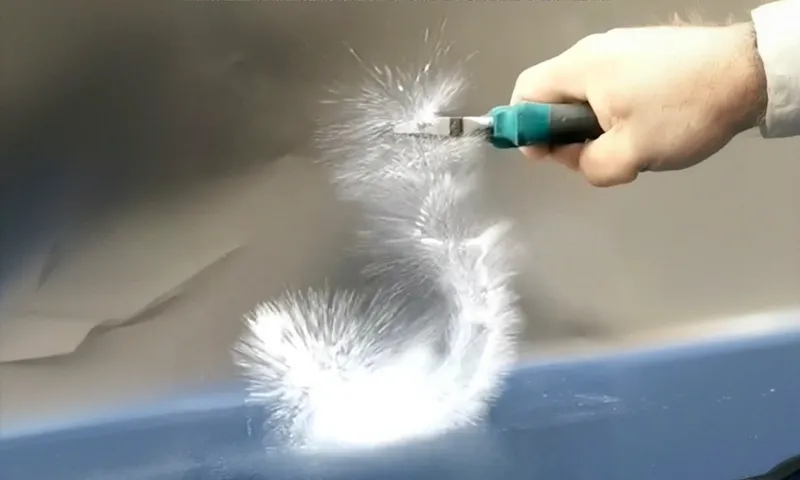
The most famous feature of a Prince Rupert’s Drop is its explosive destruction when the tail is snapped.
The tail looks harmless, but it is actually the weakest part of the entire structure. Unlike the compressed outer layer of the head, the tail contains stored tensile stress.
When the tail breaks, a crack enters the glass and travels extremely quickly through the drop. The release of internal energy causes the entire object to break apart almost instantly.
High-speed cameras have shown that the fracture can travel through the glass at speeds of approximately 1,000–2,000 meters per second, turning the entire drop into fine fragments in a fraction of a second.
Watching a Prince Rupert’s Drop break in slow motion is one of the most impressive science demonstrations available. What appears to be a simple glass object suddenly transforms into a rapidly moving wave of destruction.
The Science Behind the Strength and Weakness
The unique behavior of a Prince Rupert’s Drop comes from thermal stress.
When molten glass cools naturally, the temperature decreases gradually and the material contracts evenly. But when the glass drop falls into cold water, the outside freezes much faster than the inside.
This creates two different stress zones:
Compressive Stress on the Outside
The surface of the drop is squeezed tightly. Compressive stress makes it difficult for cracks to form and spread.
Tensile Stress Inside
The interior remains stretched because it cooled later and tried to contract after the outside had already hardened.
This internal balance creates a strange situation:
- The head is extremely resistant to damage.
- The tail acts like a trigger that releases stored energy.
A useful comparison is a stretched rubber band. The rubber band may look normal while holding energy, but cutting one small section releases that energy immediately. A Prince Rupert’s Drop works in a similar way, although the forces involved are much greater.
Are Prince Rupert’s Drops Dangerous?
Many people ask whether a Prince Rupert’s Drop is dangerous to handle.
When the drop remains intact, the rounded head is surprisingly durable. However, the tail should always be treated carefully because touching or breaking it can cause the entire drop to shatter.
For safe handling:
- Hold the drop by the thick end.
- Avoid bending or pressing the tail.
- Wear safety glasses during experiments.
- Keep children supervised when demonstrating the breaking effect.
When a Prince Rupert’s Drop breaks, the glass usually separates into many small pieces. Although the fragments are smaller than those from a normal broken glass object, eye protection is still recommended.
Prince Rupert’s Drop as a Science Experiment
One reason the Prince Rupert’s Drop remains popular is that it provides a clear visual demonstration of material science.
Students can learn about:
- Thermal expansion and contraction
- Glass manufacturing
- Internal stress
- Fracture mechanics
- Material strength
Unlike many scientific concepts that are difficult to visualize, a Prince Rupert’s Drop allows people to see the effects of invisible forces inside a physical object.
Many teachers use it as a classroom demonstration because the reaction is immediate. Students often expect the glass to break when hit, but they are surprised when it survives. The final tail-breaking demonstration creates a memorable connection between theory and real-world physics.
Why Do People Collect Prince Rupert’s Drops?
Beyond science education, Prince Rupert’s Drops have become popular collectibles.
Many collectors enjoy them because each piece represents a unique combination of:
- Natural beauty
- Scientific history
- Handmade craftsmanship
- A fascinating physical phenomenon
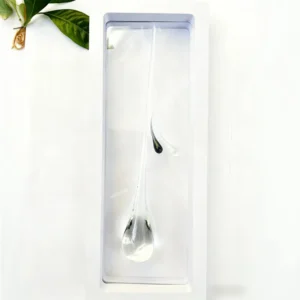
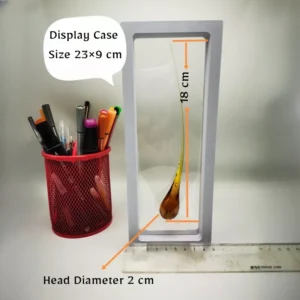
A clear glass drop displayed in a small case can become an interesting conversation piece. Visitors often ask the same question:
“How can something so fragile survive a hammer but break from a tiny tail?”
That curiosity is exactly what makes the Prince Rupert’s Drop special.
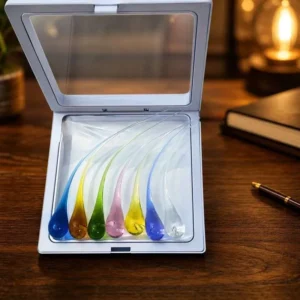
Some versions are created in different colors, sizes, and shapes, making them suitable for both scientific demonstrations and decorative displays.
Prince Rupert’s Drop vs Regular Glass
The difference between a normal glass object and a Prince Rupert’s Drop comes down to how the glass is cooled.
| Feature | Regular Glass | Prince Rupert’s Drop |
|---|---|---|
| Cooling process | Slow cooling | Rapid cooling in water |
| Internal stress | Low | Extremely high |
| Head strength | Fragile | Highly resistant |
| Tail strength | Normal | Extremely weak |
| Breaking behavior | Cracks gradually | Explodes instantly |
This unusual combination makes the Prince Rupert’s Drop different from ordinary glass and even different from many modern strengthened glass products.
Where to Buy a Prince Rupert’s Drop?
For science enthusiasts, collectors, and anyone interested in unique physical experiments, a Prince Rupert’s Drop is an affordable way to own a piece of scientific history.
When choosing a Prince Rupert’s Drop, consider:
- Glass quality
- Size and shape
- Whether it is designed for display or experiments
- Packaging protection during shipping
- Seller reliability
A well-made Prince Rupert’s Drop can be used as both an educational tool and a fascinating desktop display.
- $29.99 – $349.99Price range: $29.99 through $349.99 Select options This product has multiple variants. The options may be chosen on the product page
$59.98Original price was: $59.98.$49.98Current price is: $49.98. Select options This product has multiple variants. The options may be chosen on the product page
Final Thoughts
A Prince Rupert’s Drop is a perfect example of how science can create something that seems impossible. A small glass object can be strong enough to survive powerful impacts while containing enough hidden energy to destroy itself instantly.
Its beauty comes from this contradiction: incredible strength and extreme weakness exist in the same piece of glass.
Whether you discover it through a science experiment, a slow-motion video, or a personal collection, the Prince Rupert’s Drop continues to inspire curiosity more than 300 years after it first appeared.
It is not just a glass drop. It is a remarkable demonstration of how hidden forces can shape the world around us.