💧 ### A Glass Drop with a Surprising Secret
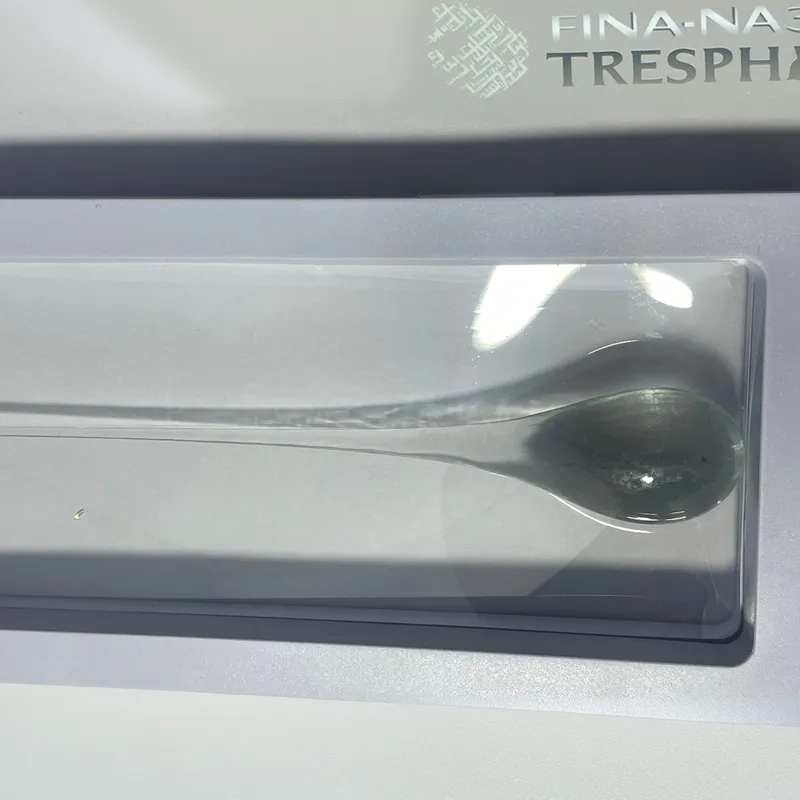
A Prince Rupert’s Drop looks like a tiny glass tadpole: a rounded bulb with a long, thin tail. It forms when molten glass is dropped into cold water. The outside cools and hardens first, while the hotter interior continues to shrink. That difference leaves the glass locked in a powerful state of internal stress—and gives the drop its famous combination of strength and fragility.
🔍 ### So, How Much Pressure Can It Take?
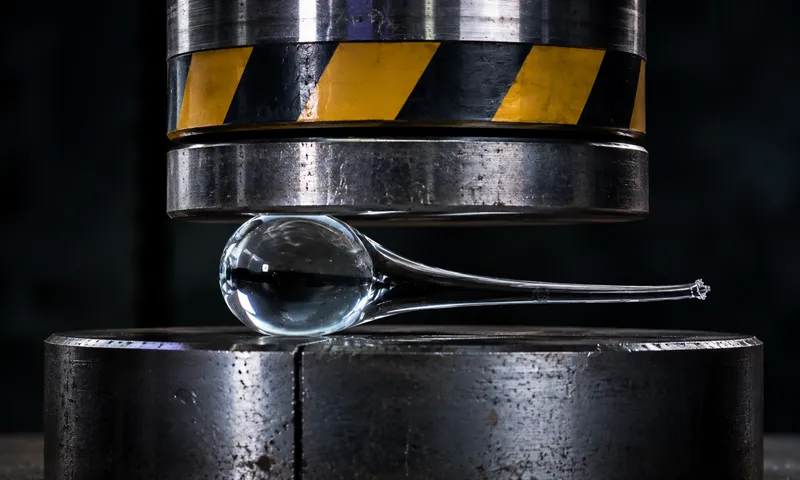
There isn’t one simple pressure limit that applies to every Prince Rupert’s Drop. Its size, shape, glass composition, and—most importantly—the direction and location of the force all matter. The rounded head can withstand surprisingly strong blows and compression. In demonstrations, it may survive a hammer strike that would break ordinary glass.
But “strong” doesn’t mean indestructible. A Prince Rupert’s Drop is not a pressure vessel, and it has no dependable rating in pounds per square inch. A force spread over the bulb is very different from a sharp impact on one small point. That’s why dramatic demonstrations should not be treated as a practical strength test.
🧪 ### Why the Bulb Can Take a Beating
The bulb’s unusual strength comes from the way its stresses are arranged. The rapidly cooled outer layer is compressed, while the inside is under tension. Cracks find it difficult to start and grow through the compressed surface, so the head can resist impacts that seem almost impossible for glass.
This balance explains why squeezing or striking the bulb may not destroy it. The stress is still there, though; it hasn’t disappeared. The drop is more like a tightly wound spring made of glass than a solid object that is strong in every direction.
⚠️ ### The Tail Is the Weak Link
The slender tail is a different story. Even a small nick or snap at its tip can send a crack racing toward the bulb. Once that crack reaches the highly stressed interior, the stored energy is released almost instantly. The entire Prince Rupert’s Drop breaks into tiny fragments in a sudden, spectacular burst.
So the answer depends on where pressure is applied. The bulb may endure a heavy blow, while damage to the tail can destroy the whole drop. Avoid testing one by hand: the fragments can be sharp, and the break happens too quickly to control.
🛠️ ### What “Withstands Pressure” Really Means
When people ask how much pressure a Prince Rupert’s Drop can withstand, they’re often mixing up several kinds of force: compression, impact, and localized damage. These are not interchangeable. A large force spread across the bulb may be tolerated, while a much smaller force applied to the tail can trigger failure.
That’s what makes the Prince Rupert’s Drop so fascinating. It can appear remarkably tough and unbelievably delicate at the same time. Its strength is real, but it depends on its shape and internal stresses—and its weakness is built right into its tail.